Backward Mutters

"The spell must be unwound, bit by bit with backward mutters of dissevering power." C.S. Lewis

Category: poetry

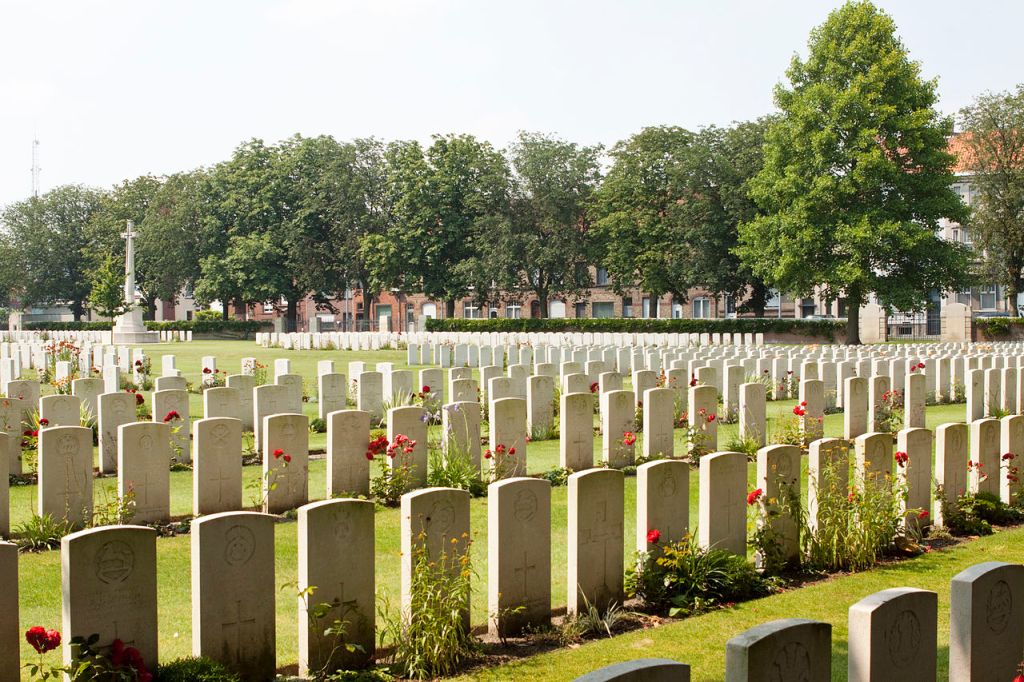
  • This rondeau is in honor of Veteran’s Day and is after John McCrae’s “In Flanders Fields.”

    You may listen to me read the poem via the player below.

    In whitened rows, a hundred score,
    The graves of soldiers of The War
    Who gave their lives, in Ypres fought,
    Who landed here, broad waters crossed
    To honor country on a shore.

    They are the sons of hope forlorn;
    Their mothers searched o’er papers poured
    The lists of names of boys now lost
    To whitened rows.

    Now poppies bloom where trenches tore
    The fields of France unto its core
    And stole our sons who dearly bought
    A no man’s land, its lines forgot,
    Where hides neath rows the sons we bore
    In whitened rows.

    Photo Credit: Wernervc, CC BY-SA 3.0 <https://creativecommons.org/licenses/by-sa/3.0&gt;, via Wikimedia Commons

    Canada. Dept. of National Defence/Library and Archives Canada/, Public domain, via Wikimedia Commons

  • Zane Vickery’s second full-length album, Interloper, is a personal work in which Vickery works to make sense and understand the purpose of his life. The album is a work, and by that I mean it is not a collection of songs, but a rock opera. Opera fits. So does, epic. Or even confession. It represents a huge effort of scale. The scale is as big as Vickery’s voice — a powerful baritone that does not crack in his higher register, and around that voice is built a powerful instrumentation along with satisfying female backup vocals. Every song has a part to play, and not one thing is wasted.

    I mentioned that the work was like an opera or an epic. Vickery’s effort swings for the fence. It is one thing to write music about your disappointment, fear, and traumatic experience, but it is another thing to compassionately imagine the inner lives of those who disappointed, terrorized, or almost killed you which he does in “The Grateful and Grieving” and “The Best You Could.” Vickery also knows that all the fingers aren’t pointing away. He too owns his part. And this is what makes the story have such an epic quality. The problems are not flat, two-dimensional. They bear the complexities of real life such as, How does one come to terms with the wounding in which you’ve been wounded as well as the guilt of your own wounding of others? Interloper speaks to the existential reality and lurking fear that if we’re honest, we do not belong anywhere. Among victims, we are a victimizer and among the victimizers, we’ve been victimized.

    This leads to a quality that reflects the bigness of his work. Vickery is a romantic. I don’t mean this is some historical or academic or dime store novel way, I mean this in what I can only describe as a big-sky, greatest love of the universe sort of way. Though time will be the judge, Vickery’s attempt at storytelling is as ambitious as Dante’s traveling through Hell and Purgatory into the loving heart of the universe. It reflects the unfiltered honesty of Augustine’s Confession wherein a restless, confounded soul seeks to find rest for his restless heart. And though he is still young (from my vantage point on the line of life), it seems he has been given a cosmic glimpse. I”m staking my life in believing his glimpse reflects reality. It is my hope that the glimpse he offers is true. Even if one doesn’t believe in the sort of Love about which Vickery sings, one should want it be true. What Vickery shows us is this: That there is more mercy than our wounds or wounding can tax. There is more beauty spilling through the ordinary moments of a day that we can create on our own, and the love of God is real. Vickery I think, testifies to Paul’s words in 1 Corinthians 13, “Love bears all things, believes all things, hopes all things, endures all things. Love never ends.”

    And this may be the sign of the true artistry of his work. It is inspiring. Listening to what he sees, makes you want to be able to see what he has come to see. In my listening to the album over the past two days, the first thing it inspired was and attempt to write a review that was firstly creative — a poem. It is made to honor and reflects the impact his music has had. Here’s what I first wrote which you may listen to via the player below.

    "His Story"

    His is a story that’s ever-been told
    Of a man who on the eve of growing old
    Must face reality: how he got here
    And how one must face all the fears one fears--
    A story told by Paul and John long ago
    And Augustine, Dante, Victor Hugo.

    Stories filled with scenes of abuse and harm
    Where the truth lies veiled, somehow charmed
    By familiar words that no longer sound
    The depths of the pain though in pain, we drown
    In resentment, stuck, at hell’s city gate,
    Harder-hearted, wondering if it's too late?

    Stories of the wounds we inflicted on
    Those we should’ve loved, held dear all along
    But turned against, shunned, ghosted, failed, betrayed
    To transfer the shame of our heart-hole pain,
    And clinching smashed peaches, the question stings,
    Why on earth would I do such a thing?

    Forced, it seems to do things we never thought
    We could ever do, conscience seared, then caught
    In a weighty moment of Light-Surprise
    That we do not have to live in the lies.
    Shocked, holding mercy like candlesticks,
    We must decide, What do we do with this?

    I wonder at the ways that brought me here
    Am I exiled or will Welcome draw near?
    Is there a place midst wind-swept fields
    Where Beauty looks down, does not wield
    A sword but shade, takes us in hand to bring
    Us into the loving heart and truth of everything?

    To Zane and to the musicians, vocalists, engineers, and production team, keep up the great work, and if given a choice, sink towards the sunrise.

    Interloper releases at midnight on August 23, 2024 and is available for purchase and streaming on all streaming platforms. You’ll want to own this one.

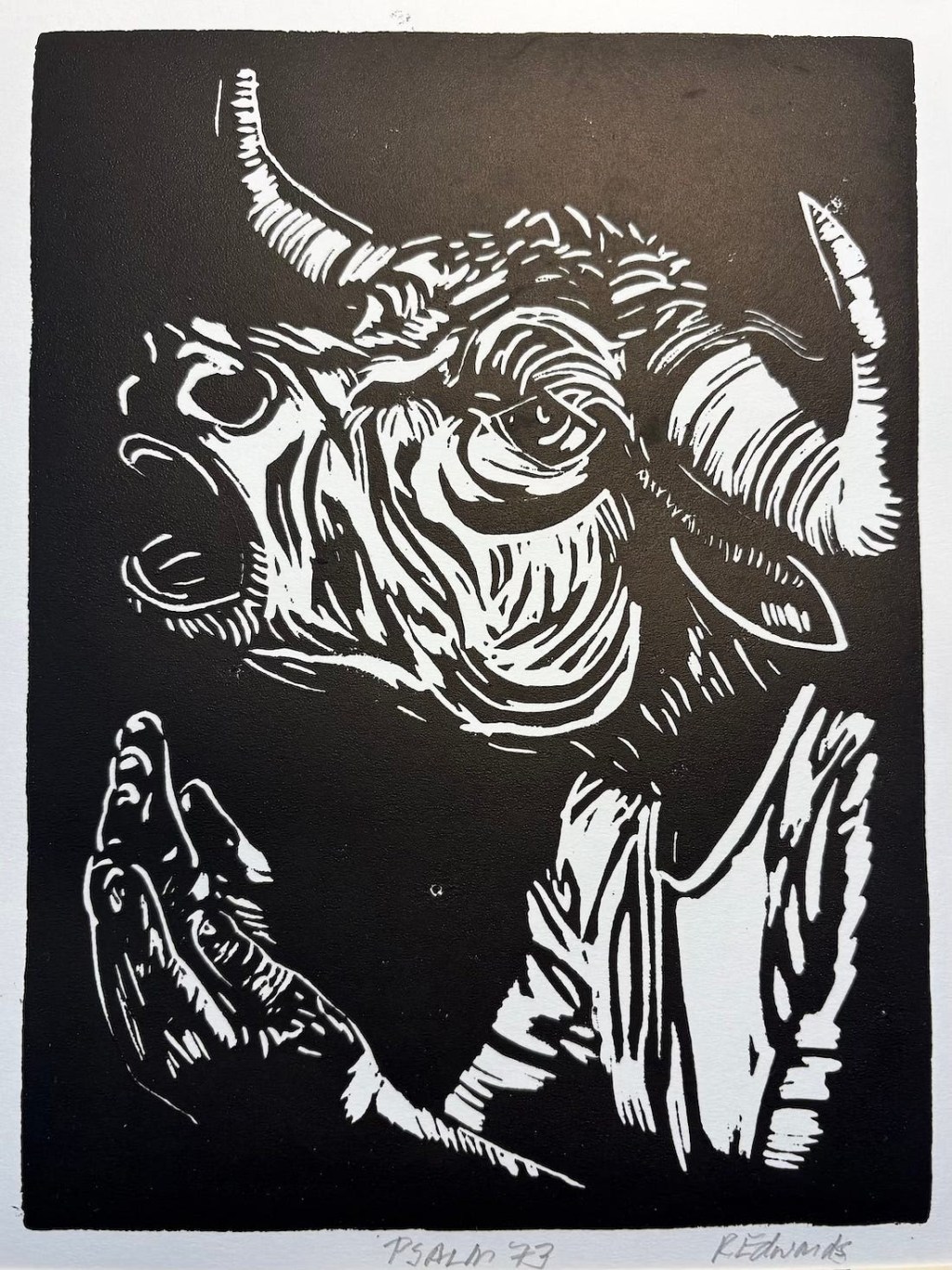
  • The following poem is inspired by two scriptures: Revelation 12:15-17 which reads, “The serpent poured water like a river out of his mouth after the woman, to sweep her away with a flood,” and Luke 22:54-62 which tells of the Apostle’s Peter’s denial of Jesus. In addition, I was also inspired by Malcolm Guite’s poem, “What If?” Anyone familiar with his poem will recognized the debt. Any credit to mine is due to his. And fault is mine alone.

    You may listen to read the poem via the player below.

    From the Dragon's mouth words pour out
    As a river where truth seems to shout:
    The shameful curses and accusations,
    Of scorching scornful condemnations,
    The accuser’s raging imprecations,
    To drown and make you his prize.

    In desperate deceit we lie, we make
    Excuses for self-preservation's sake.
    We deflect, dismissing with simplifications
    To manipulate another’s expectations,
    Managing with half-truths our own reputation,
    Denying there could be any association
    Between our acts and the Father of Lies.

    And in these moments when we double-speak,
    Fearing the loss of the fame we seek
    And terrified of their implications,
    We deny every little insinuation
    That could possibly merit an accusation,
    We call down curses and condemnations
    That we have any association
    With this Teacher condemned to die.

    It is then and there, at dawn's first light
    When the rooster’s cry breaks the silence of night
    We remember our confident exaggeration:
    Defiant against His prognostication
    That we could be tempted to prevarication,
    Or withhold obedient offered oblation,
    Deny our love — our chosen vocation
    Merely to protect our own reputation?
    And we see through The Other’s knowing eyes.

    Swept ‘way — a horrified, humiliated heap
    Tears pour and flood, with words we weep
    For the hasty vows we swore in the commotion,
    Of the sting of exposure and anger at the notion,
    That one could be guilty of such insincere devotion…
    Drowning in shame and regret and resentful emotions
    No more words, no excuses, no alibis.

    © Randy Edwards 2016, 2024 (edited)

    linocut after: Detail of the woman and the beast spewing water into the earth, from the Welles Apocalypse, England, c. 1310, Royal MS 15 D II, f. 156r

  • Here is a sonnet that came to me earlier in the week. You may listen to me read it via the player below.

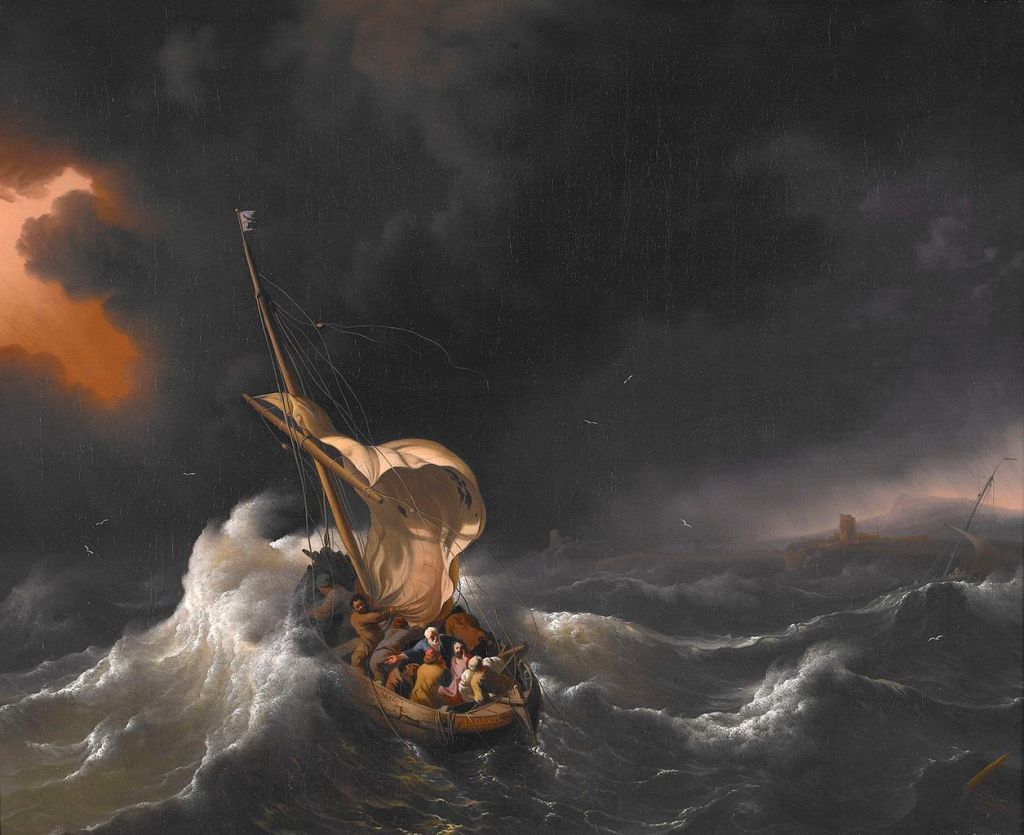
    Set as the keel, He was placed between two
    Ends, and into His arms, He took His crew;
    As a ship, He bore them into the sea
    Within the hold of his keel and beam.

    Though waves break over, He holds them above
    As on dry ground, He bears them through flood—
    Keeps them sunward; though dark, grey clouds roll,
    The arms of his beam keeps them safe in His hold.

    They do not see Him; He bears neath the waves—
    Acquainted with grief, passed into the grave,
    His body stretched ‘cross keel and beam,
    Then tossed as a Jonah into the sea
    Where He bears them safe to His harbor’s fold,
    And they bear Him in the Supper they hold.

    © Randall Edwards 2024

    artwork: Ludolf Bakhuizen, Public domain, via Wikimedia
  • This past Advent and Christmas season, the Almond Tree Artist Collective has been engaged in creating works based on weekly prompts taken from Isaiah 40:1-5 which reads,

    Comfort, comfort my people, says your God.
    Speak tenderly to Jerusalem,
      and cry to her
    that her warfare is ended,
    that her iniquity is pardoned,
      that she has received from the LORD’S hand
    double for all her sins.

    A voice cries:
    “In the wilderness prepare the way of the LORD;
      make straight in the desert a highway for our God.
    Every valley shall be lifted up,
      and every mountain and hill be made low;
    the uneven ground shall become level,
      and the rough places a plain.
    And the glory of the LORD shall be revealed,
      and all flesh shall see it together,
      for the mouth of the LORD has spoken.”
    I. Comfort

    When all the world has been torn down,
    When all Her glory, lost,
    Speak Comfort, Comfort to the town
    Who to the sea was tossed.

    Away in chains to Babylon
    Her townsfolk, tied and led
    Cast from the garden land and home
    Into a living death.

    We pass through sea, to foreign lands
    Where accents strike our ears,
    We pine by banks beached on the sand
    And salt its shore with tears.

    They asked of us to sing a song—
    A song we sang in Zion;
    We choke on words, weep for the wrongs,
    The shame of Judah’s lion.

    Speak, Comfort, Comfort, to my own
    The Lord says, tenderly,
    To Jerusalem cast down
    I’ll draw her from the sea.

    II. Proclaim

    Proclaim to her, say it now,
    Mercy comes tomorrow;
    He’ll break your yoke, unhook the plough,
    Wipe your tears of sorrow.

    Speak Comfort, Comfort, day has come
    Your ransom’s paid in full;
    Your time of service is now done;
    The balance paid, double.

    It’s finished; Yes, there is no more—
    Both debt and due are paid;
    Your Hope through Achor’s valley door
    Has made for you a way.

    Daughter Jerusalem, my son,
    Judah, come take my hand;
    The blessing lost, I now have won—
    Return you to the Land.

    IIII. Wilderness

    A desert voice, a herald cries,
    Prepare, Prepare today
    Come, by Him who lives yet dies
    Come through the desert way.

    Through death, not ‘round, your victory
    Not by the coastal road—
    A straight highway through desert sea,
    The highway of our God.

    Elijah, come and turn the hearts
    Of fathers to the children;
    Desire pierce with longing’s darts
    Wound with love, the nations.

    Make straight the way from Galilee
    The land of the Gentiles,
    From nations far beyond the Sea
    Return from your exile.

    Comfort, Comfort prepare the way—
    A highway for our God;
    Come by the narrow, Eastern way
    Back from the land of Nod.

    IV. Justice

    From Euphrates’ garden banks
    Pack your years of burdens
    Return, Return, join with the ranks
    Who take to Him their hurtings.

    When you come to the desert shore
    Fear not the waves of sand,
    He shall level the desert floor,
    Return you to the Land.

    Look not to the mountain’s heights
    Where others lay idle,
    And give themselves to their delights,
    Revelry, unbridled.

    He shall bring down the proud who boast
    And lift up the lowly;
    He shall make of least, the most—
    Make the common, holy.

    But what of death’s deep, dark defile?
    How can we e’er pass through?
    Though our descent goes on for miles,
    In life, He’ll raise unto.

    The valley’s shall exalted be;
    The mountains shall be lowed;
    Enslaved, her captives shall be freed,
    And gentle made the road.

    She’ll mount on wings, shall fly amain,
    Renewed, soar as eagles
    The mountain way be made a plain
    Those Not, now made, My People.

    V. Glory

    And all of them shall surely see
    My Glory when revealed;
    The Way that passes through the sea—
    The stripes He bore that healed.

    The glory I’ve to show the world
    Is glory not of man,
    A banquet banner, love unfurled,
    Crowned head, pierced feet and hand.

    Will you perceive the love I bear
    Or of it be ashamed?
    Shall in it boast? Cherish? Hold dear?
    Lift up? Deny? Disclaim?

    True, the Word the Lord has spoken,
    Shall surely come to pass;
    His promise shall ne’er be broken;
    He shall redeem at last.

    Speak Comfort, Comfort, tenderly,
    Your Lord shall bring you home;
    He shall not burden but gently lead
    The mothers with their young.

    © Randall Edwards 2023